

Understanding Stench Warning Systems in Underground Mines

Underground, workers cannot always see or hear a warning fast enough. So, mines use smell instead. A strong-smelling gas is added to the air pipes that already run through every part of the mine. If something goes wrong, that smell spreads to workers right away. They do not need to see a light or hear an alarm. They just smell it and know it is time to get out.
How Stench Warning Systems Actually Protect an Underground Mine
The Smell is the Warning
Most stench gas systems rely on ethyl mercaptan, also called ethanethiol, injected in small quantities into the mine's compressed air lines. The odour is sharp and unmistakable. It carries through the airway the same way any other gas would. Crews learn to identify that smell during induction.
Manual and Automated Systems Work Differently
A Type 1 stench system is manual. Someone at a control point decides conditions warrant a warning and triggers the injection themselves. This means the response time depends on a person noticing the hazard first. A Type 3 automated stench system removes that step. It ties directly into gas or fire detection and releases the odorant the moment readings cross a set threshold.
The Warning Only Reaches Where the Airflow Takes It
The stench system uses the same air pipes as the mine's ventilation. So, if the airflow map is wrong or out of date, the warning does not spread evenly. One heading might get a strong smell right away. Another heading nearby might barely get any smell at all. This is why the airflow map needs to match how air is actually moving underground today.
Stench Systems Are One Piece of a Larger Safety Setup
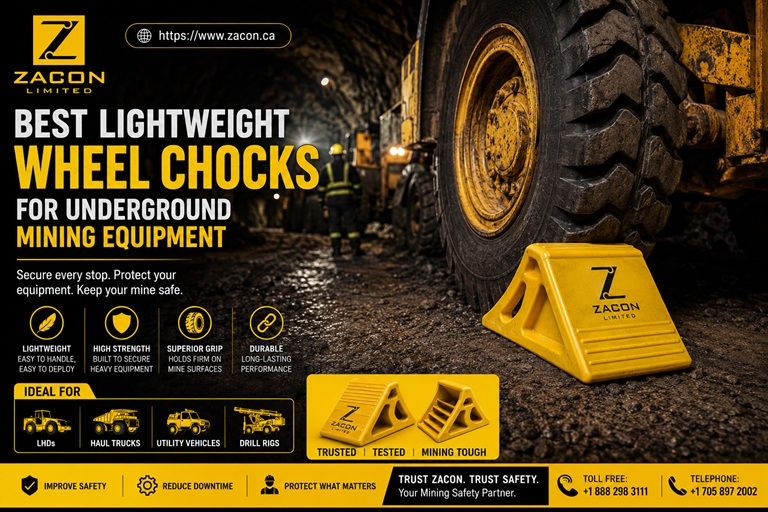
A stench system tells crews something is wrong and gets them moving. Fire doors slow what is spreading behind them. Wheel chocks keep parked equipment from rolling into an evacuation route while everyone is trying to get out. Zacon builds all of these, along with balanced ventilation doors, air chambers, and protective equipment. A stench system works best when it is planned together with the rest of a mine's safety equipment.
Final Word
Underground emergency communication breaks down fast if it depends on one alarm reaching every section on time. Zacon supplies Type 1 and Type 3 stench gas systems, along with fire doors, balanced ventilation doors, air chambers, wheel chocks, and protective equipment built for underground conditions. Call toll-free at +1 888 298 3111 or telephone +1 705 897 2002.
FAQs
Q1. What is a mine stench warning system?
It is a safety system that injects a strong-smelling odorant into a mine's compressed air lines so that workers underground can recognise a hazard by smell and evacuate.
Q2. What is the difference between a Type 1 and Type 3 stench system?
A Type 1 system is manual and needs a person at a control point to trigger it once they judge conditions are serious enough. A Type 3 system is automated and triggers itself as soon as connected gas or fire sensors cross a set threshold.
Q3. What chemical is used in stench gas systems?
Most systems use ethyl mercaptan, also known as ethanethiol, chosen because its smell is distinct.
Q4. Is ethyl mercaptan dangerous to breathe?
The amount injected into a stench system is small and used specifically for its smell rather than any toxic effect.


Comments